Social Security is usually judged by how much income it replaces. A better question for many clients is how much of that check is still left after paying for healthcare.
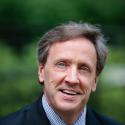
Join Matt Rutledge, Professor of the Practice in the Boston College Economics Department and Research Fellow at the Center for Retirement Research at Boston College, as he presents new research on how out-of-pocket medical costs reduce retirees’ spending power.
Using Health and Retirement Study data on Medicare beneficiaries age 65 and older, Rutledge looks at how premiums, deductibles, co-pays and uncovered services cut into both Social Security and total retirement income. The findings may surprise you. The typical retiree keeps about 71% of their Social Security check after medical costs, but 1 in 4 spend more than half of it, and about 5% spend all of it. Measured against total income, the burden looks much lighter, which is exactly why it is easy to miss for clients who rely mostly on Social Security.
Key topics include:
- How much of Social Security and total retirement income is left after out-of-pocket medical costs
- Why the burden falls hardest on women, retirees in poor health, and lower-income households not on Medicaid
- Whether Medicare Advantage, retiree health insurance, or Medicaid actually lowers out-of-pocket costs
- How Part D and the Inflation Reduction Act changed prescription drug costs, and where costs remain uncontrolled
- What’s ahead: the 2027 Medicaid cuts, pressure on Medicare Advantage, and the “elephant in the room,” long-term care
Advisors will come away with a clearer way to judge whether a client’s retirement income is enough once healthcare is paid for, and which clients are most at risk.

Matt Rutledge is a professor of the practice of economics at Boston College. He is also a research fellow at the Center for Retirement Research at Boston College. He conducts research on labor market outcomes for older workers, Social Security claiming behavior, disability insurance application, pension coverage, retirement saving, retirement expectations, employer demand for older workers, unemployment insurance, and health insurance coverage. He has also worked for the Economic Research Initiative on the Uninsured and the Federal Reserve Bank of Boston. Before joining Boston College, he earned a doctorate in economics from the University of Michigan in the fields of health economics, labor economics, and public finance.